Kumite guidelines
Sparring rules, contact policy and protective equipment
Kumite means sparring. These are Yushukan's guidelines for safe kumite practice in the dojo. For the benefit and safety of all.
Kumite is the culmination of all other training, where students put their skills into action with a partner, testing what they know in a freer, more spirited environment of live exchange. Like all aspects of sport, it carries inherent risk.
For that reason we hold to a set of clear rules and guidelines that must be adhered to by every practitioner. They exist to protect you, your training partners, and the longevity of your karate.
What you must wear, and what is optional
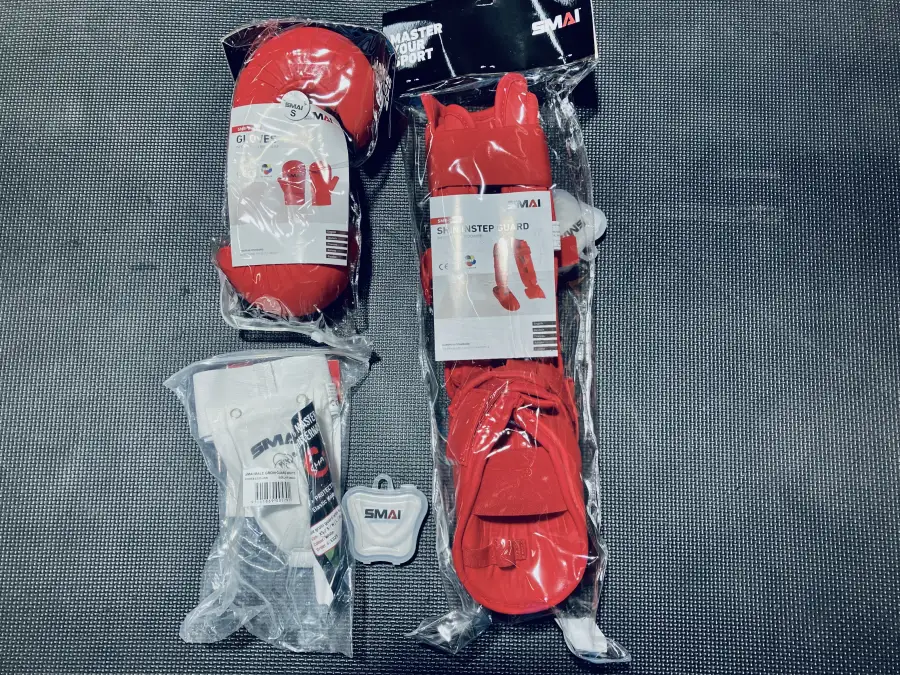
Approved protective equipment must be worn during kumite sessions. Mandatory and optional items are listed below, in line with safe practice and insurance guidelines.
Boys and Girls
Mandatory
- Approved hand, shin and instep protection
- Mouthguard
- Groin guard (boys)
Optional
- Head gear
- Chest protector
- Female groin guard
Teens and Adults
Mandatory
- Approved hand, shin and instep protection
- Mouthguard
- Groin guard (men)
Optional
- Head protection
- Chest guard
- Female groin guard
Non-use of mandatory equipment
Any non-use of mandatory equipment during kumite is done at the practitioner's own risk and therefore falls outside of insurance protections for injury.
Where to buy
All equipment is available for purchase through Yushukan Karate.
Train hard, with your partner in mind
Safety is the biggest factor when it comes to sparring in the dojo. Spar to your own capability while being aware of your partner's capability as well.
While we aim to train to improve our fighting skills, we must do so with the wellbeing of our training partners in mind. All grade levels are welcome to spar. However, certain techniques are reserved for different grade levels due to the skill required to perform them safely.
Health limitations
It is the responsibility of the practitioner to let the instructor know of any health concerns or limitations affecting their ability to participate in kumite. If a concern exists but the participant still wishes to spar, that responsibility and risk rests with the participant, and they should inform every kumite partner of the concern before commencing the bout.
Prohibited in all dojo kumite
Applies to all grades
The following techniques are not permitted at any grade level, regardless of experience:
What is permitted as you progress
Junior Grades
White to OrangeAt this level students are not allowed to sweep, catch limbs, grab, pull, clinch or use knee strikes on their partner. The focus is on basic strikes and kicks, and getting used to the art of sparring.
Intermediate Grades
Green to PurpleClinch is allowed, and controlled sweeps and takedowns may be performed, but only if you can do them safely and control your partner all the way to the ground. Students should be working on distance control, movement, attack strength, defence and counter-attacking.
Brown and Above
Brown to DanAll techniques are allowed, besides the banned techniques above, performed with control.
Contact is earned over time
To reduce the risk of injury, contact with your sparring partner is developed gradually. Even once contact is allowed, students retain the right to opt out of any contact if they wish.
Junior
White to Orange
No contact.
Intermediate
Green to Purple
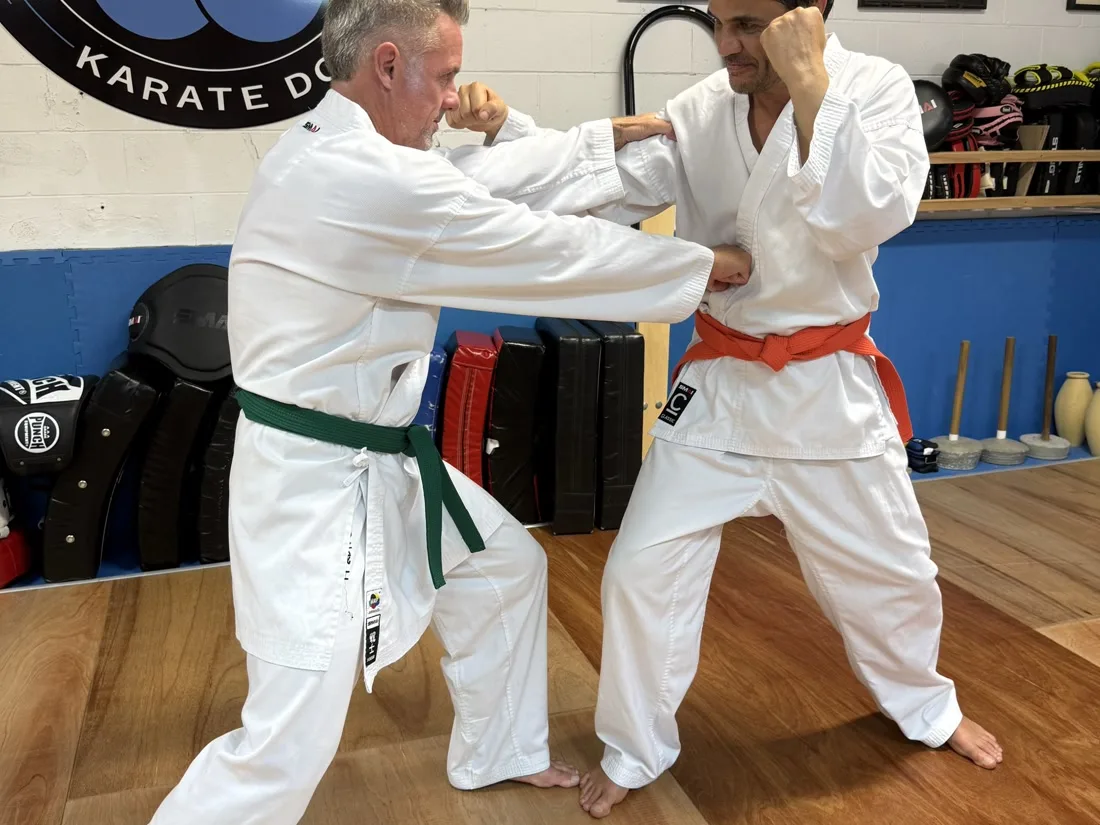
Light body and leg contact allowed. No head contact.
Advanced
Brown to Dan
Light to medium contact to the body and legs allowed. Very minimal head contact: a light touch with gloves is acceptable.
Notes on contact
Any contact deemed excessive by the supervising instructor will receive a warning. Future breaches will be regarded as not following safe practice and may result in the student no longer being able to participate in kumite. If one practitioner asks another to reduce the level of contact, the offending practitioner must accept that request. It should not reach that point in the first place.
Three forms of practice
Sanbon Kumite
Three-step sparringPre-arranged sparring drills performed with control.
Ippon Kumite
Sport-style, point scoringA more sport-style exchange aimed at scoring points, stopping and starting with the participants’ acknowledgement of techniques that have scored. A scored technique is one that has made it inside the opponent’s defence, landed in a scoring area (body, head etc.) and retracted back to the attacker without deviation.
Jyu Kumite
Free sparringFree-flowing sparring allowing continuous movement and exchange of attacking and defending techniques. More intense and not requiring a start and stop. Practitioners decide for themselves when a break and restart is needed.
Practised between consenting students, under agreed rules
Kumite practice is done between consenting students, under the agreed rules and conditions. Students participate in kumite at their own risk and with the knowledge that accidents can occur even when all safety precautions are taken.
Yushukan Karate is not liable for any accidents or injuries that may occur, except where it can be proven there was negligence on the club's behalf. We want all students to be able to participate in kumite training, and for it to be an enjoyable and enriching experience.
Sparring is earned, not rushed.
Every Yushukan student starts with Karate Ready: a structured 3-week pathway before kumite begins.