
Kids karate in Tweed Heads South (ages 7 to 12)
Goju Ryu for kids 7 to 12 · Tweed Heads South Honbu · $99 for 3 weeks
Most parents arrive with the same quiet worry.
A structured, supportive class where children aged 7 to 12 learn to listen, move with control, and carry themselves differently. No experience needed. Starting from 7 is a strength, not a limit.
Start Kids Karate ReadyWorking With Children Check held by all instructors · $20M public liability · Sportscover Australia
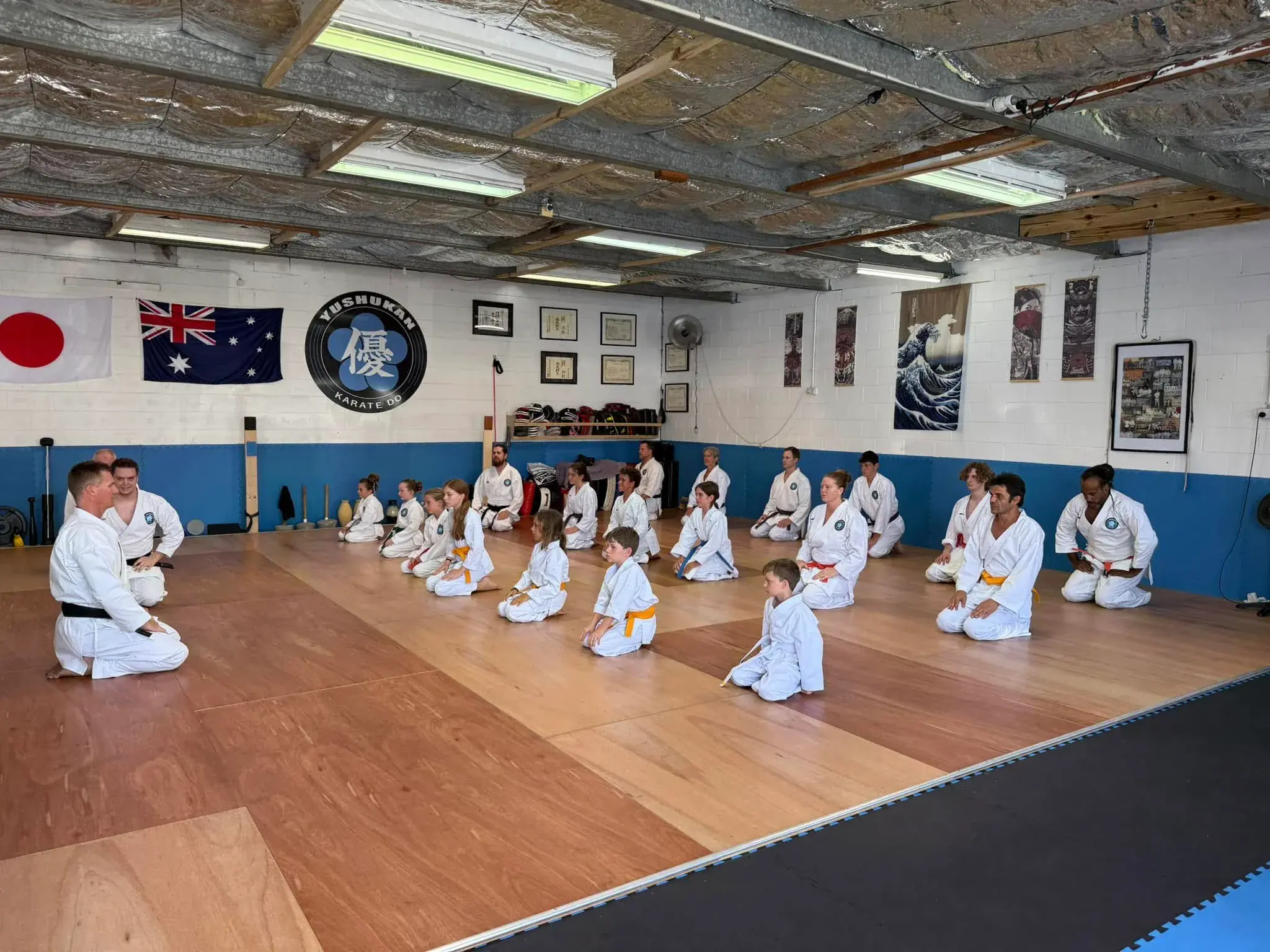
What your child does not need to be.
Most parents arrive with the same quiet questions. Here is the honest answer.
Your child is NOT expected to be
- Confident
- Sporty
- Fit
- Already disciplined
- Already respectful in formal settings
Your child is expected to be
Willing to try. That is the only requirement on day one.
By 7, a child can learn karate properly.
We do not run toddler karate. At 7 and up, training produces meaningful progress.
Attention
A child of 7+ can hold focus long enough to actually learn a technique, not just be entertained.
Respect
They understand instructions, etiquette and why we bow. Discipline means something.
Body control
Coordination and balance have matured enough for real karate movement, safely.
Meaningful progress
They remember what they learned last week and build on it, so grading reflects genuine skill.
What parents notice at home
Confidence
Real capability, not empty praise. Kids stand and speak differently within weeks.
Focus
Following instruction, holding attention, and finishing what they start.
Respect
Etiquette, bowing, and how to treat instructors, partners and the dojo.
Self-control
Karate is for control: of body, of temper, and of when to walk away.
Structured progression, not a single snapshot.
Seven in-dojo sessions in total: six training sessions across three weeks plus the Week 4 graduation, all backed by short home sessions through Skool Karate Weekly.
- Week 1
Dojo introduction and physical readiness
Two 30-minute sessions focused on settling in. Sensei meets your child and reads their starting point. Bowing, etiquette and basic responses introduced.
Why: Children settle through familiarity, not pressure. Once your child knows where they belong, learning happens fast.
- Week 2
Movement, coordination and body control
Balance drills, coordination work, basic stances and age-appropriate bodyweight strength. A short home session via Skool Karate Weekly.
Why: Coordination and control come before complexity, so the Week 3 karate skills land properly.
- Week 3
Beginner karate skills and class readiness
Basic strikes and kicks, pad and bag work with controlled contact (never on partners), and moving basics: step, strike, reset.
Why: The foundation is set, so now they get the karate, ready to handle real technique.
- Week 4
Graduation session and readiness check
A 45-minute Monday session with parents attending. Your child demonstrates what they have learned and Sensei gives an honest readiness recommendation.
Why: A real, evidence-based recommendation that a single trial class can never give: continue, repeat with support, or step away with what they got.
What a session looks like
Each 30-minute session runs the same way, and the order matters.
What a typical kids activity does not.
Posture first, voice second, technique last.
Bullies target children who look like targets, and posture and eye contact shift within weeks. We teach that physical conflict is the last option, not the first. Most children who come to us because they are being bullied never need the physical part. Aggression at school is treated as a serious breach of dojo values, not something we tolerate.
How Yushukan handles bullying →Simple to start.
A water bottle, comfortable clothes they can move in, and a willingness to try. We train in bare feet. No gi (uniform) is required at the start. After the 3-week Karate Ready program there is a Week 4 readiness check, then a term with a built-in mutual gate, so either side can walk if it is not the right fit.
"Effort is the standard. Perfection is not."
What we ask of you and your child
You do not need to be perfect. You do need to do these things.
Bring your child to all six sessions
Confidence is built through consistency, not single visits.
Arrive 5 minutes early
Children settle better when they are not rushed in.
Trust the progression
The order of the program is deliberate.
Tell us anything we should know: medical, behavioural or sensory
Honest information lets us prepare a safe, supportive first session.
Let your child own the decision at Week 4
Karate the child chose for themselves is karate that lasts.
Complete the home sessions on Skool
Between-class practice is where the in-dojo lessons consolidate.
Differences and modifications
Some children arrive with sensory needs, learning differences or anxiety. That is normal, and Sensei Sam handles it well, but only if he knows. Tell us in the intake form and again when you arrive. Your child will be supported intelligently, never singled out or pushed past what is appropriate. We adapt the program to your child, not the other way around.
Real words from Yushukan families
"Sensei Sam is fantastic. My daughter has done karate with him since she was 6 and a half and has grown so much, and my 5 and a half year old son has now joined in. It has helped with focus. I wanted to work on confidence and assertiveness with my daughter, and Sensei happily incorporated more of both into each session."
Chrystal Colley
a year ago
"My kids started Yushukan last year and it has given them new confidence, discipline and self-defence skills. Sensei Sam and Tony are fantastic coaches: fun but firm, caring, and great role models. So friendly and a great community to be part of."
"Sam is an excellent Sensei, thorough and holistic. He builds confidence in the physical movements of karate and couples them with the ethos, spirit and discipline that is the equally important aspect. My son, 7 and a half, is benefiting greatly through this guided approach to karate and life in general."
"My sons love their karate class. Their senseis develop a great connection with the kids and teach real Japanese values and skills. Highly recommend."
Kids FAQ
My child has never done martial arts. Is that okay? +
My child is shy. Will this push them too hard? +
What does my child need to bring? +
Will karate make my child more aggressive at school? +
Will karate help if my child is being bullied? +
What does Yushukan teach about handling bullies, specifically? +
What if my child decides karate isn't for them? +
What does it cost after the 3 weeks? +
The safety and standards, in plain sight.
- Tweed Heads South Honbu Dojo
- Kids start from 7+
- Working With Children Check
- Public liability insurance
- Seiwakai / JKF Gojukai affiliated
- Traditional Goju Ryu lineage
- Transparent pricing
- No long-term lock-in
- Controlled, supervised, grade-appropriate training
Start your child properly.
Start properly with a structured 3-week pathway. $99 to begin, $90 each for two or more family members. No pressure, no long-term lock-in.
Ask Which Class Is Right